
Embark on an engaging journey through JavaScript! In this tutorial, we will delve into the ‘this’ keyword, a seemingly simple but incredibly powerful aspect of programming.
Understanding ‘this’ can make your code smarter and your life easier. Whether you’re just starting out with coding or looking to refresh your understanding, this guide will simplify the ‘this’ keyword, making it easy to grasp.
With real examples and straightforward explanations, you’ll see how ‘this’ keyword works in different parts of your code. Let’s get started!
What is ‘this’?
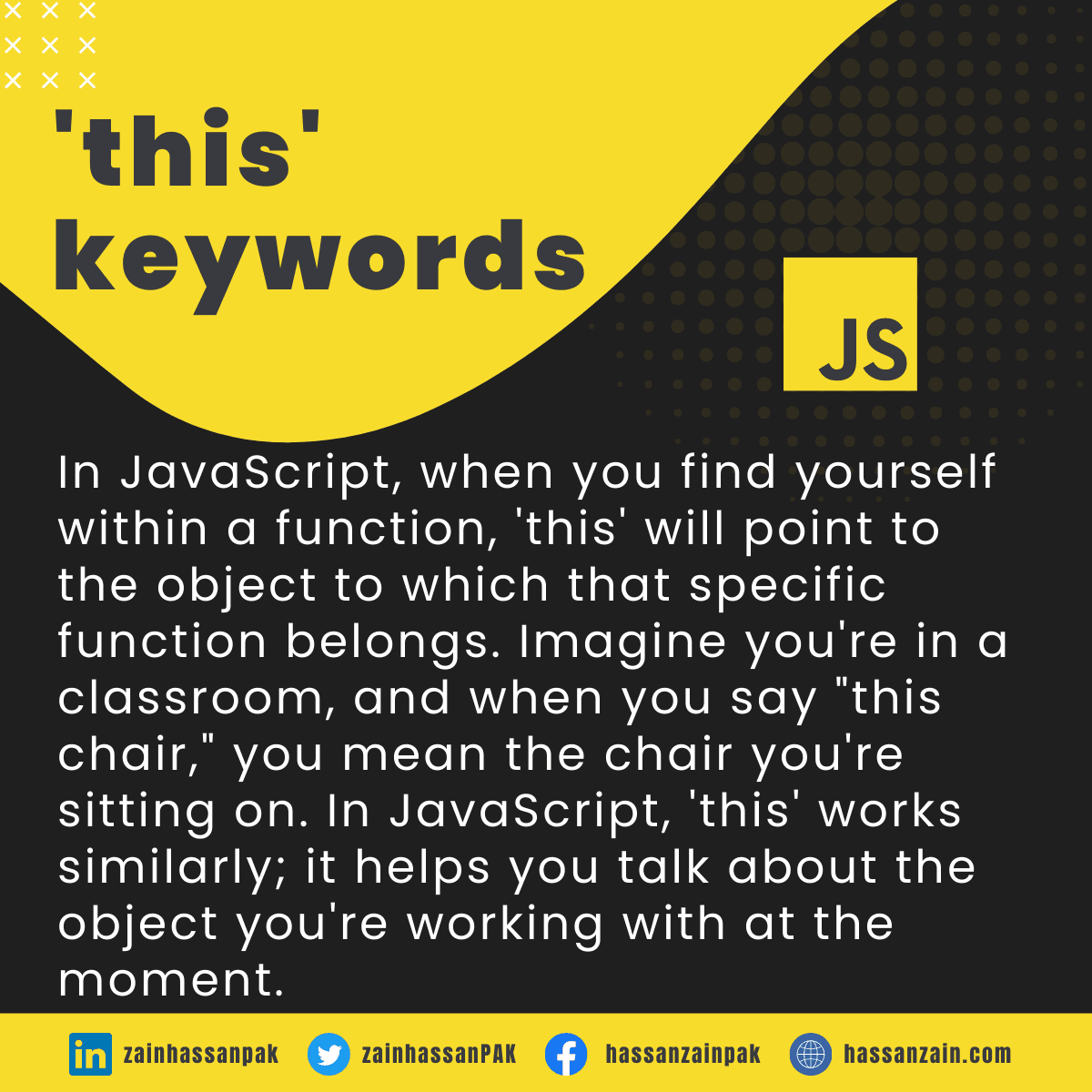
In JavaScript, when you find yourself within a function, ‘this’ will point to the object to which that specific function belongs. Imagine you’re in a classroom, and when you say “this chair,” you mean the chair you’re sitting on. In JavaScript, ‘this’ works similarly; it helps you talk about the object you’re working with at the moment.
How to Use ‘this’ Keyword:
Here’s a simple example to explain how ‘this’ works:
var person = {
  name: 'John',
  sayHello: function() {
    console.log('Hello, my name is ' + this.name);
  }
};

person.sayHello(); // Outputs: 'Hello, my name is John'
In this case, ‘this.name’ refers to ‘John’ because ‘this’ is pointing to the ‘person’ object.
‘this’ keyword in Different Contexts
Inside a Method: ‘this’ points to the particular object that is in possession of the method being executed.
In a Regular Function: When the ‘this’ keyword is utilized outside the context of a particular object, it refers to the overarching global object, like the ‘window’ object found in internet browsers.
In an Event: this’ points to the specific part or item that was acted upon during the event.
Common Pitfalls:
Sometimes ‘this’ keyword can be confusing because it might not point to what you think it should. Using arrow functions or binding the function to an object can help you make ‘this’ behave the way you want.
Global Context:
When you utilize ‘this’ outside the boundaries of a function, it designates the overarching global object within the context. It’s the universal context of your code, applicable to everything within the script.
console.log(this); // Outputs the global object, like 'window' in a browserObject Method:
In an object’s method, ‘this’ refers specifically to the object itself. Imagine it as a friendly guide, always indicating the exact object you’re currently working with or handling.
var car = {
  brand: "Toyota",
  getBrand: function() { return this.brand; }
};
console.log(car.getBrand()); // Outputs "Toyota"
Regular Function:
In a function that doesn’t belong to an object, ‘this’ points to the global object instead. This behavior can be unexpected, so it requires careful attention to understand where ‘this’ is pointing.
function showThis() { return this; }
console.log(showThis()); // Outputs the global object
Event Handlers:
With event handling, ‘this’ becomes a spotlight on the specific HTML element receiving the event. It helps identify the exact part of the page being acted upon.
<button onclick="alert(this.innerHTML)">Click me</button>Arrow Functions:
Arrow functions have a unique handling of ‘this’; they keep it from the surrounding lexical context. It creates consistency and predictability in how ‘this’ behaves within the function.
var obj = {
  name: "John",
  greet: () => { return `Hello ${this.name}`; }
};
console.log(obj.greet()); // Outputs "Hello undefined" because arrow functions don't have their 'this'
Constructor Functions:
When building new objects with a constructor, ‘this’ refers to the newly created object. It is like a temporary placeholder for the object being initialized.
function Person(name) {
  this.name = name;
}
var john = new Person("John");
console.log(john.name); // Outputs "John"
Class Methods:
In class methods, ‘this’ points to the specific instance of the class that you are currently handling or manipulating. Think of it as a helpful friend who always understands exactly which part of your code you’re focusing on at that moment.
class Dog {
  constructor(name) { this.name = name; }
  bark() { return `${this.name} barks!`; }
}
var rover = new Dog("Rover");
console.log(rover.bark()); // Outputs "Rover barks!"
Conclusion:
In JavaScript, the ‘this’ keyword is a dynamic and essential element, altering what it refers to based on its location and usage within the code. From global contexts to objects and functions, understanding ‘this’ can greatly enhance your coding skills.
While it may appear complex initially, consistent practice and careful observation of how it operates in various situations will transform it into an essential and reliable component of your JavaScript coding arsenal.
It’s like having a guide that helps you navigate through various parts of your code, making your coding journey more efficient and enjoyable.